
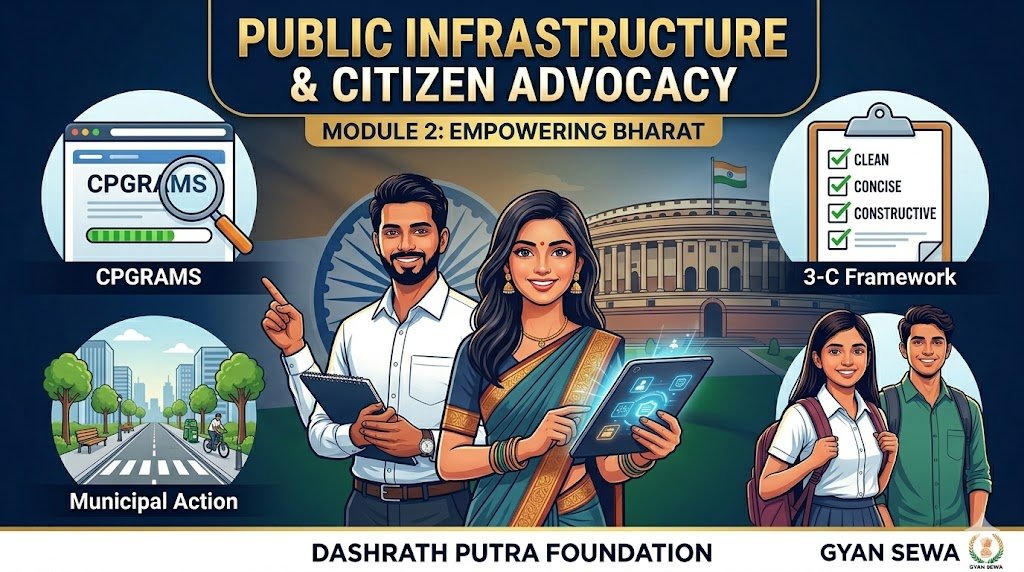
1. Your Right to Safe Public Spaces
Every citizen of Bharat has the right to safe, well-maintained public infrastructure. This includes well-lit streets, secure public parks, properly maintained roads, and functioning civic amenities. Advocating for these spaces is not just a legal right, but a vital civic duty that ensures community welfare.
2. National Reporting: The CPGRAMS Portal
When local requests go unanswered, citizens can escalate issues using national digital infrastructure.
-
What it is: The Centralised Public Grievance Redress and Monitoring System (CPGRAMS) is a 24×7 online national platform. It allows citizens to lodge complaints regarding government service delivery or public infrastructure.
-
How it works: It connects you directly to Ministries and State Departments across Bharat. When you file a grievance, you receive a unique registration ID to track the exact status of your complaint.
-
The Appeal Process: If you are not satisfied with how a department resolved your issue, the portal provides an appeal facility. You do not have to accept a poor resolution.
3. Local Municipal Action
While national portals are powerful, the fastest resolution for everyday infrastructure issues (like a broken streetlight, dangerous potholes, or unsafe park conditions) often comes from engaging directly with your local civic bodies.
-
Municipal Corporations: Every city has a local municipal body that handles direct infrastructure maintenance. Many of these now have dedicated apps or WhatsApp helplines for instant citizen reporting.
-
National Swachhata Apps: For sanitation and cleanliness hazards, the government provides centralized mobile apps that route your geo-tagged photos directly to the local sanitary inspector.
4. The Framework for Drafting a Formal Complaint
Whether you are writing a physical letter or submitting a digital grievance regarding public spaces, always use the “3-C” Framework to ensure your complaint is taken seriously:
-
Clear: State the exact location (using nearby landmarks or GPS coordinates) and the specific nature of the hazard. Do not use vague language.
-
Concise: Keep the focus entirely on the safety risk to the public. Always attach visual evidence, such as timestamped photographs or videos.
-
Constructive: Reference the specific civic duty of the department (e.g., “Under the municipal guidelines for public park safety…”) and request a specific timeline for an official inspection.