
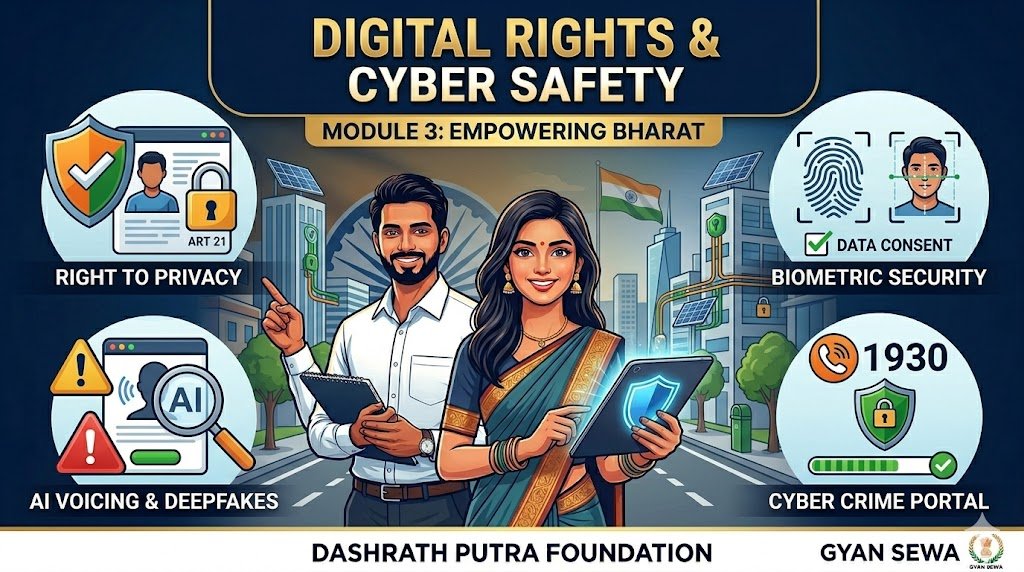
1. The Right to Privacy: Your Digital Shield
In Bharat, the Right to Privacy is legally recognized as a fundamental right under Article 21 of the Constitution (Protection of Life and Personal Liberty). This applies directly to your digital footprint.
-
Data Consent: Organizations and applications must obtain explicit consent before collecting your personal data.
-
Data Minimization: Entities are only legally permitted to collect the specific data necessary for the service they are providing. You have the right to question why an app requires unnecessary permissions (e.g., a simple calculator app asking for access to your microphone or contacts).
2. Identifying Emerging Cyber Threats (AI & Deepfakes)
With the rapid advancement of technology, recognizing modern scams is the first line of defense, especially when helping to protect vulnerable groups like elderly family members who may not be digitally native.
-
Phishing & Smishing: Fraudulent emails (phishing) or SMS messages (smishing) disguised as official bank or government alerts, designed to steal passwords or OTPs.
-
AI Voice Cloning & Deepfakes: Cybercriminals now use artificial intelligence to clone the voices or faces of family members or officials. They often create a false sense of extreme urgency (e.g., a fake emergency requiring immediate digital payment). Always verify by cutting the call and dialing the person back directly on their known phone number.
3. Protecting Vulnerable Community Members
A human-first approach to technology means actively shielding those around you from digital harm.
-
Two-Factor Authentication (2FA): Ensure that 2FA is enabled on all critical accounts (email, banking, WhatsApp) for yourself and your elderly family members.
-
Zero-Trust Approach: Teach community members the “Zero-Trust” rule: never share an OTP, PIN, or UPI PIN to receive money. A UPI PIN is only required when sending money.
4. The National Cyber Crime Reporting Framework
If you or someone in your community falls victim to digital fraud, speed is critical.
-
The National Helpline (1930): In cases of financial cyber fraud, the immediate first step is to call the 1930 national helpline. Dialing this immediately increases the chances of authorities freezing the fraudulent transaction before the money leaves the banking system.
-
The Cyber Crime Portal: For all digital crimes (including financial fraud, cyberbullying, deepfakes, and identity theft), citizens should file a formal complaint at cybercrime.gov.in.
-
Anonymity: The national portal allows citizens to report specific severe offenses (such as child sexual abuse material or crimes against women) completely anonymously.