
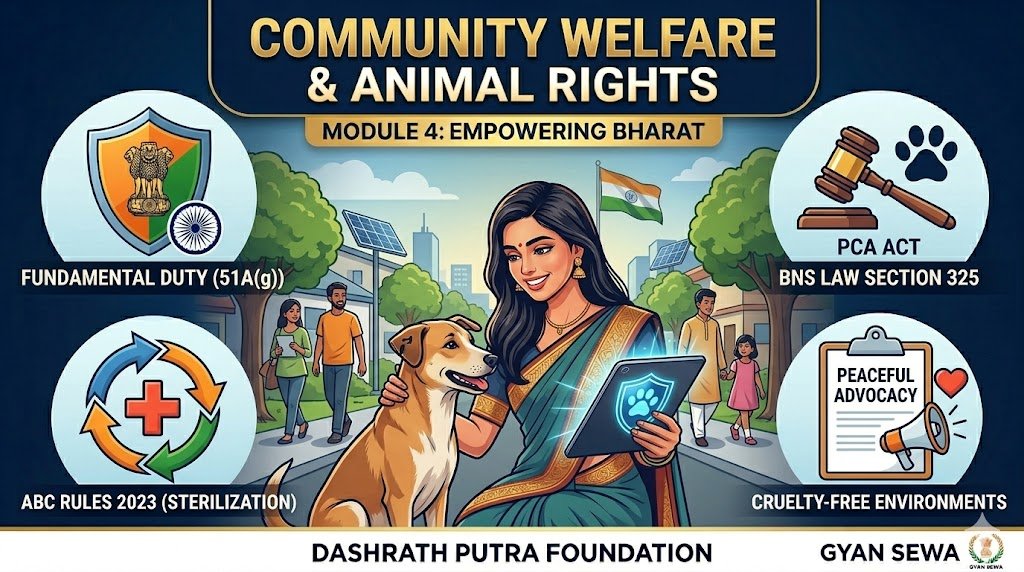
1. The Constitutional and Criminal Framework
The legal protection of animals in Bharat is not merely a moral guideline; it is embedded in our constitutional and criminal laws.
-
Article 51A(g): The Constitution of Bharat explicitly mandates that it is the fundamental duty of every citizen to protect and improve the natural environment and to have compassion for all living creatures.
-
Bharatiya Nyaya Sanhita (BNS) 2023 – Section 325: Under the new criminal code replacing the old IPC (Sections 428/429), Section 325 strictly addresses the offense of mischief by killing, poisoning, maiming, or rendering useless any animal. It eliminates previous price-based distinctions between animals and sets a unified, strict punishment. Violators can face imprisonment of up to 5 years, a fine, or both.
-
The PCA Act 1960: The Prevention of Cruelty to Animals Act remains the baseline legislation prohibiting beating, torturing, abandoning, or failing to provide sufficient food and shelter to animals.
2. The Animal Birth Control (ABC) Rules, 2023
The ABC Rules 2023 represent a major shift in how street dogs, legally recognized as “community dogs,” are managed. They focus on scientific population control and strictly prohibit cruelty.
-
Catch-Neuter-Vaccinate-Release (CNVR): The law mandates that local authorities and recognized Animal Welfare Organizations (AWOs) must capture dogs humanely, sterilize them, vaccinate them against rabies, and release them back into their exact original location.
-
Relocation is Illegal: Under the ABC Rules 2023 and Supreme Court directives, street dogs cannot be relocated or permanently removed from their territories. Relocation causes extreme territorial stress and disrupts the ecological balance.
-
Designated Feeding Spots: Resident Welfare Associations (RWAs) are legally mandated to designate feeding spots for community dogs. These spots must be located away from areas frequently used by children and senior citizens.
-
Euthanasia Restrictions: Random killing of dogs is strictly prohibited. Euthanasia can only be performed by a qualified veterinarian in a humane manner and is legally restricted solely to dogs that are incurably ill or mortally wounded.
3. Advocating for Safe Coexistence
When communities view companion animals as integral visionaries of their social ecosystem rather than nuisances, peaceful coexistence thrives.
-
Feeder Protections: Citizens who feed community dogs are performing a constitutional duty and are legally protected from harassment. If an RWA or local group attempts to physically intimidate a community feeder, it is a punishable offense.
-
Conflict Resolution: The ABC Rules establish Local Animal Birth Control Monitoring Committees to manage community conflicts. Grievances should be directed to these bodies or the Animal Welfare Board of India (AWBI) rather than taking illegal, vigilante action against the animals.